Remote and outside labor forces operate a lengthy way from aid, in every sense. When something goes wrong on a farm track, a forestry block, a wind ranch, a rail corridor or a construction website 2 hours from the nearby health center, there is no fast back-up. Your team is the response.
That truth changes just how you must think about first aid training. Standard a couple of day class courses, instructed in city offices, still have their place. However, for several employers, express first aid courses and fast CPR training are what make normal, trustworthy training practical. If individuals can not spare a full day of rest the job, they frequently wind up without training at all.
I have trained exterior workers who silently confessed they had actually refrained from doing any type of first aid or CPR courses for 8 to 10 years, just due to the fact that they might not validate shedding a day of efficiency. When their manager switched to express first aid training, participation jumped, and the overall requirement of action in drills improved within a single season.
The purpose is not to tick a conformity box. The goal is for the initial person on scene to show rate, calm, and capability, even in rough atmospheres. Express first aid, when made well, can sustain that.
Why remote and exterior labor forces require a different first aid mindset
If you run a city workplace, many clinical emergency situations obtain an expert rescue action within minutes. For a team operating in remote or rugged surface, the time from injury to advanced treatment may be an hour or more. Those additional minutes transform everything.
In remote and outdoor settings, you frequently face a mix of aspects. There may be limited interactions, long stretcher lugs, bad climate, and improvisated equipment. Hazards are likewise different. Quad rollovers in agriculture, chainsaw injuries in forestry, falls from height in building, and cool water immersion in coastal job all appear more frequently than metropolitan cardiac arrest at the printer.
In my experience, 3 changes in assuming make the biggest difference for remote teams.
First, the conventional first aid course material have to be adapted to the real area risks. Rural and outside employees require more environmental emergency training, even more circumstance exercise with limited equipment, and even more focus on improvisation.
Second, workers have to expect to supply care for longer. That implies more powerful standard life support skills, not simply a quick summary of CPR and defibrillation. Take care of blood loss, breathing, and shock can easily stretch to 30 to 60 mins prior to rescue arrives.
Third, training should be constant enough Great post to read and reasonable enough that people do not freeze or forget. This is where express first aid courses and fast first aid training prove beneficial. Short, focused sessions provided more often tend to stick better than a big block of content provided when every few years.
What "express" actually means in first aid and CPR training
The term express first aid course gets used freely. Sometimes it suggests a strong, compressed program that values time without reducing corners. Various other times, it is little bit more than a hurried lecture for a certificate theoretically. The difference remains in how the course is structured and what is needed previously and after the classroom session.
A well made express first aid or express cpr course normally does 3 things.
It steps background concept to self paced discovering. Trainees full online components prior to they arrive. They cover legal obligations, basic makeup, and vital concepts at their very own speed. This means the in person time can focus on functional work.
It tightens Go here the emphasis to the abilities most pertinent to the employees. For remote and outside crews, that implies heavy emphasis on managing bleeding, cracks, spine worries, hypothermia, warmth illness, asthma, anaphylaxis, and CPR. Much less time is invested in low danger, reduced effect conditions.
It needs evaluation that demonstrates competence, not simply participation. A fast first aid course can properly award a first aid certificate if individuals reveal, under some pressure, that they can perform key abilities to basic. Short does not need to imply superficial.
By comparison, be cautious of fast first aid courses or fast cpr courses that promise certification with nearly no practical analysis, or no chance to practice skills on manikins, or no scenarios that mirror your workplace. Fast certification is appealing, but if the training does not stand up under tension, it can develop incorrect confidence.
The core abilities that can not be compromised
Express first aid courses live or die by what they keep, not what they reduced. For remote and outdoor employees, particular skills are non negotiable, also in fast first aid courses or fast cpr refresher courses.
At a minimum, any express first aid training for these settings should leave individuals proficient in the complying with cluster of skills.
They must have the ability to run a quick scene survey and key analysis. That includes danger checks in dynamic atmospheres, calling for help early, and prioritising life dangers prior to additional injuries.
They needs to be comfortable with first aid and cpr as a combined response. That implies reliable chest compressions, rescue breaths where suitable, secure use of an AED, and rotation in between rescuers to decrease exhaustion throughout prolonged CPR. Numerous express cpr courses focus on urban cases where ambulance reaction is quick. For remote employees, express cpr training must prepare for longer efforts.
They has to handle major bleeding with straight pressure, pressure dressings, and, where ideal and legal, tourniquets and haemostatic dressings. Forestry and construction websites particularly see injuries where blood loss is the vital factor.
They must stabilise believed spine injuries on uneven ground with really restricted equipment. In a genuine event, you seldom have a full paramedic set. A fast first aid course that educates individuals to improvise with coats, ropes, and knapsacks is better than one that only educates book techniques.
They needs to recognise environmental dangers rapidly. Hypothermia, hyperthermia, warm stroke, dehydration, and lightning danger behave extremely in a different way in remote surface than they do in community. Outdoor workers require greater than a passing slide on these topics.
Once these foundations are in location, express first aid courses can layer in allergic reactions, bronchial asthma, diabetes, seizures, minor wound treatment, and various other regular problems. For some teams, specifically those handling children in exterior education or rural childcare, express child care first aid courses likewise require modules on choking, febrile convulsions, and paediatric CPR ratios.
Express child care first aid for outdoor settings
Many childcare employees and teachers are currently leading youngsters into forests, farm brows through, outdoor education and learning camps, and nature play programs. The threats are various to a class. Kids stray, climb up, respond highly to insect stings, and become hypothermic or dried faster than adults.
An express childcare first aid course that mirrors a common classroom program misses that reality. Express childcare first aid training for exterior settings ought to cover three additional dimensions.
First, paediatric first aid and cpr technique need to represent real terrain. Rescuers often attempt child CPR on barbecue tables, wet ground, or cramped car seats. Training needs to provide staff time to try CPR on youngster and infant manikins in these unpleasant positions, not just on a flat tidy floor.
Second, an express child care first aid program needs a more powerful concentrate on allergic reaction and bronchial asthma management in the field. That indicates sensible drills with adrenaline car injectors, spacer devices, and inhalers, and practical circumstances where one adult manages several troubled kids at once.
Third, the course should speak about team administration under tension. In every https://cristiannirj990.tearosediner.net/fast-track-first-aid-course-obtain-licensed-in-a-solitary-day real case I have reviewed that engaged youngsters outdoors, there was at least someone doing first aid and someone shepherding or reassuring the remainder of the team. Training that thinks a solitary child and a single grown-up overlooks just how childcare actually works.
Providers that provide express child care first aid courses customized to exterior programs are still a minority. When you look for an express childcare first aid course near me, ask particularly about ecological and paediatric content that mirrors your tasks. A generic program may not handle that nuance.
Making express courses help remote rosters
A large benefit of express first aid courses is arranging flexibility. Remote and exterior job typically operates on rosters, change patterns, and seasonal optimals that do not match a typical company week. A traditional 2 day first aid course can wipe out a crucial work window, specifically at harvest, lambing, wet season prep work, or mid project.
I have actually seen 3 models function especially well.
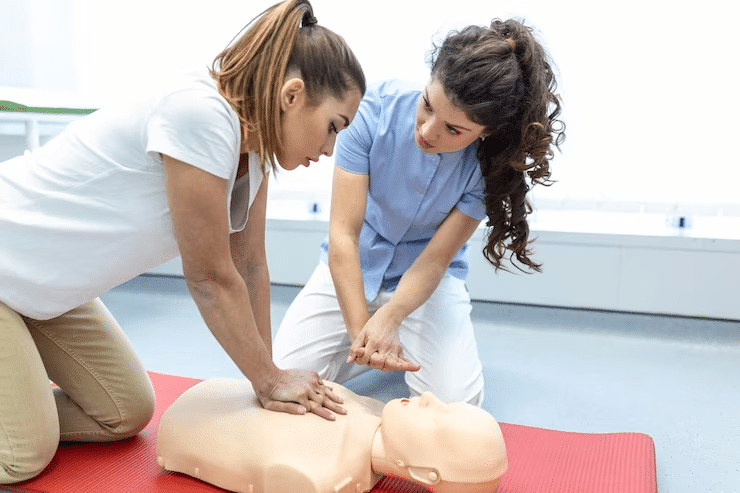
Some employers run brief express first aid and cpr courses at shift changeover factors. Crews coming off a turning remain on an extra half day to complete sensible training, after completing on-line content while on site during reduced risk periods.
Others split fast first aid training right into components across a number of weeks. Employees complete a two or three hour express cpr course first, then a separate half day concentrated on injury management, after that a last session for environmental and medical issues. This fits around changing weather and field conditions.
A third strategy uses a blended version where a nucleus gets advanced fap first aid training, while the larger labor force completes much shorter express first aid and fast cpr correspondence course sessions. The core group works as lead responders, however everyone has sufficient skill to act if they are initially on scene.
However you make it, the key is predictability. Remote employees are made use of to long drives, fatigue, and shifting strategies. If express first aid courses are set up carelessly, attendance and retention suffer. A foreseeable rotation, such as a fast first aid course every one year and a short express cpr refresher at the 6 month mark, maintains abilities alive without overwhelming the roster.
What to seek in an express first aid provider
If you kind fast first aid course near me into a search engine, you will certainly see a mix of huge national providers, specific niche outside professionals, and generic training stores. The best companion for a remote or exterior workforce is not constantly the most inexpensive or the closest. Practical experience in comparable environments matters more.
When analyzing companies, I suggest you make use of a brief, focused checklist rather than rely upon advertising language.

1) Verify that the fitness instructor has actual area experience. Ask whether they have actually operated in remote action, search and rescue, outside education and learning, or comparable locations. In my monitoring, instructors that have in fact treated people in challenging terrain instruct very in a different way, with even more focus on improvisation and scene management.
2) Inspect the structure of the express first aid course. Search for mixed understanding, realistic scenario time, and clear assessment standards. Ask the amount of participants will certainly remain in each course. Quality hands on technique is tough to provide in very large teams, especially for first aid and cpr course content.
3) Testimonial the details components. Does the course address your risks, such as machinery entrapment, water rescue, altitude, or animal handling? Does their fast cpr and first aid program allow for practice with the exact AED version and first aid sets you use?
4) Validate the certification. Make sure the first aid certificate meets your regulative demands and sector standards. Some areas define web content and duration for first aid courses and first aid and cpr training classes. A course that is too brief, without appropriate pre learning, may not be recognised.
5) Ask about refresher courses and comply with up. Excellent carriers build in options for fast cpr refresher course sessions or brief toolbox talks months later. Skill degeneration is an actual issue. You desire a partner who sees training as a cycle, not a solitary event.
A short pre course discussion with the fitness instructor frequently tells you more than a glossy brochure. Pay attention for functional, specific answers instead of generic claims.
Here is an easy checklist you can adjust when reviewing options:
- Does the provider tailor material to your real workplace and risks? How much hands on time, per person, is allocated to CPR and key first aid skills? What online or pre course understanding is anticipated, and how is it assessed? Is the fitness instructor experienced with remote, exterior, or high threat job settings? How will they assist you plan future refreshers and express first aid courses?
Balancing rate, high quality, and lawful requirements
One of the most usual inquiries I learn through managers is whether a fast first aid course or express cpr training will certainly satisfy regulatory authorities. The straightforward solution is that it depends on your jurisdiction, your market, and the framework of the course.
Most regulatory authorities concentrate less on the length of time the course runs and more on whether the called for subjects are covered to a specified requirement. That is where combined discovering comes in. If a first aid and cpr course calls for, for instance, 8 hours of complete direction, a service provider may properly provide 4 hours of online modules and a 4 hour express first aid useful, rather than a full day in a classroom.
Problems occur when fast certification is supplied without that deepness. A 2 hour course without pre knowing, no evaluation, and very little method may not fulfill legal thresholds for first aid training, even if the certificate claims or else. As the employer, you bring duty for choosing courses that meet standards.
There is also a danger of over fixing. Some safety supervisors, burned by weak short courses, firmly insist that every worker participate in long, common programs that cover a vast spectrum of low relevance content. The result is frequently poor engagement. Employees leave with a certificate yet vague recall of crucial skills.
An efficient balance for remote and outdoor groups resembles this. Most of personnel total focused, fast first aid courses that straight attend to leading threats and construct solid fundamental life assistance abilities. A smaller cadre full advanced first aid training, with longer one-on-one time and scenario based assessment. With each other, they create a layered feedback system on site.
Integrating express first aid into your bigger security system
Training on its own does not save lives. It has to rest within a more comprehensive system that includes equipment, treatments, communications, and culture. Express first aid courses for remote employees function best when they are integrated into that system, not bolted on in the nick of time to please compliance.
An efficient strategy tends to comply with a brief series of steps:
- Map your top event risks and worst reliable situations for each site or project. Match those threats to specific first aid and cpr abilities, equipment, and interaction needs. Choose express first aid courses and first aid and cpr training classes that explicitly cover those skills in reasonable scenarios. Equip teams with kits, AEDs, and communication tools that straighten with what they were educated to use. Rehearse feedback plans via brief, regular drills that mirror your training and refine your procedures.
When you run drills after training, gaps end up being visible swiftly. Maybe the express cpr course instructed proper pad placement, however workers uncover their AED is saved too away from high threat areas. Possibly first aid and cpr course circumstances assumed trusted mobile insurance coverage, while in reality you depend on satellite phones and radios. These understandings only arise when training and practice are very closely linked.
Over time, several organisations move from responsive, certificate based training to a more mature design where express first aid, fast cpr, and situation drills are part of a recurring rhythm. People quit asking, "When is my following course due?" and start asking, "When are we next practicing that rescue situation from the south system?"
A brief situation example from area practice
Several years ago, I dealt with a renewable resource firm constructing generators in a remote, windy corridor. The nearest ambulance base was about 90 minutes away on good roads. Early in the task, the firm sent out each staff to a typical urban first aid course. The course covered work environment injuries broadly, yet there was virtually no practice in harnesses, inadequate climate, or on irregular ground. When we ran a joint exercise with neighborhood emergency situation solutions, the gaps were obvious.
After that exercise, the firm redesigned its technique. They involved a company experienced in outdoor and commercial rescue to deliver express first aid courses on website. Employees finished on-line components during downtime in camp, after that went to a four hour useful that occurred on real wind turbine systems, gravel accessibility roads, and in lorries. Fast cpr training utilized the exact same AED designs set up throughout the website. Circumstances entailed wind, noise, and the awkward angles they would encounter if a person collapsed at height.
They additionally introduced short fast cpr refresher course sessions at the beginning of regular monthly safety meetings. These 20 min refresher courses concentrated only on compressions, AED use, and team communication. Within a year, when a professional suffered a significant heart event in a staging location, the feedback was fast, worked with, and confident. CPR was started within a minute, the AED was used in approximately three mins, and handover to paramedics occurred with a clear spoken record that showed their training.
No training program assures an end result, however the difference between their first exercise and that genuine case was raw. The sensible, customized, express first aid training plainly paid off.
Final thoughts for choice makers
If you are responsible for the safety and security of remote or exterior workers, your first aid strategy is entitled to as much thought as your harnesses, guards, or lockout treatments. Time and access restraints are real, yet they do not need to prevent durable first aid training.
Express first aid courses, express cpr courses, and express childcare first aid programs can provide high criteria in much shorter blocks when they are properly created and integrated. Fast first aid and cpr training classes function best when they:
Respect the realities of your rosters and sites.
Focus over effect threats and vital skills.
Use blended finding out to protect hands on practice time.
Support normal refreshers so abilities remain alive.

Your workers may never ever have to treat a severe injury or carry out CPR halfway up a hill or close to a river going across. If they do, they will not care for how long their course ran. They will certainly care that, under pressure, their hands and voice understand what to do. Well selected express first aid courses can aid them reach that factor, without pulling them out of the field longer than necessary.